Lofa County University Holds Research Writing and Grant Proposal Development Workshop for Faculty

July 5, 2026

Lofa County University Holds Research Writing and Grant Proposal Development Workshop for Faculty.

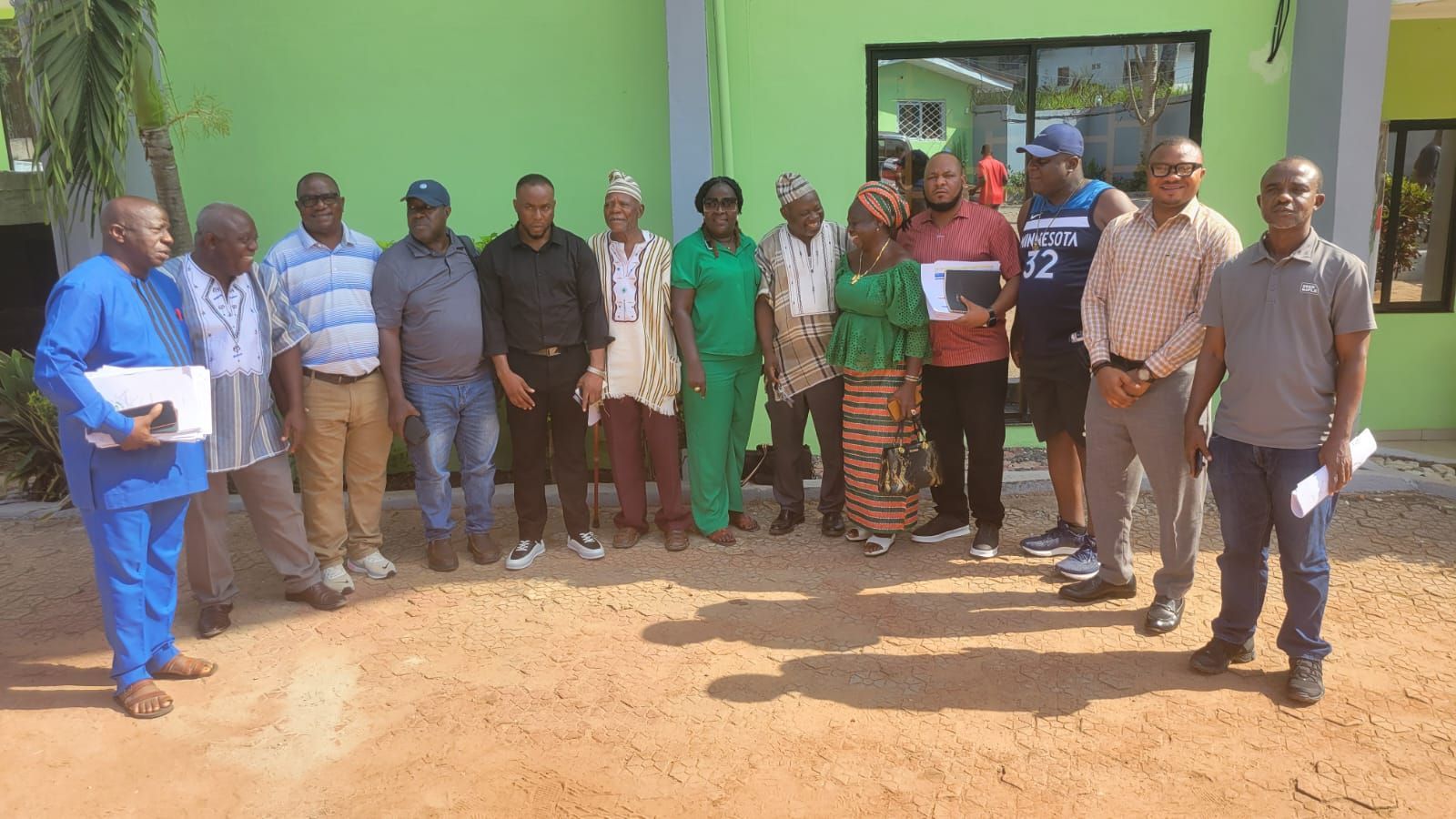
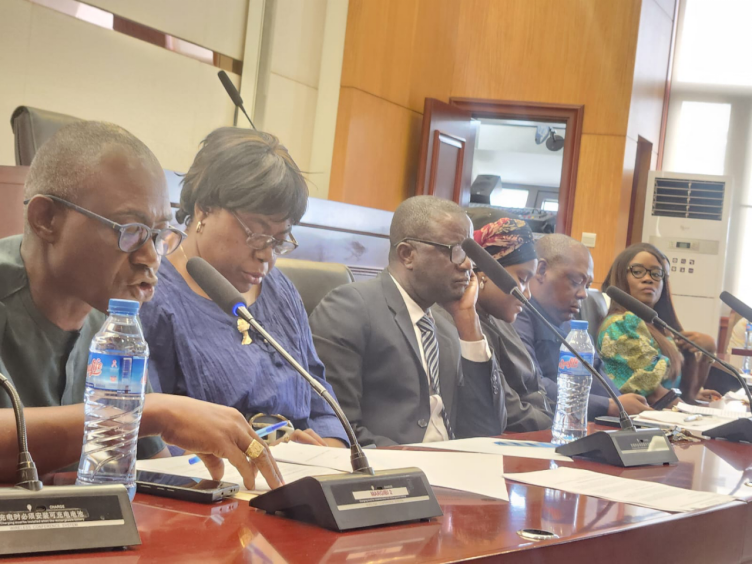
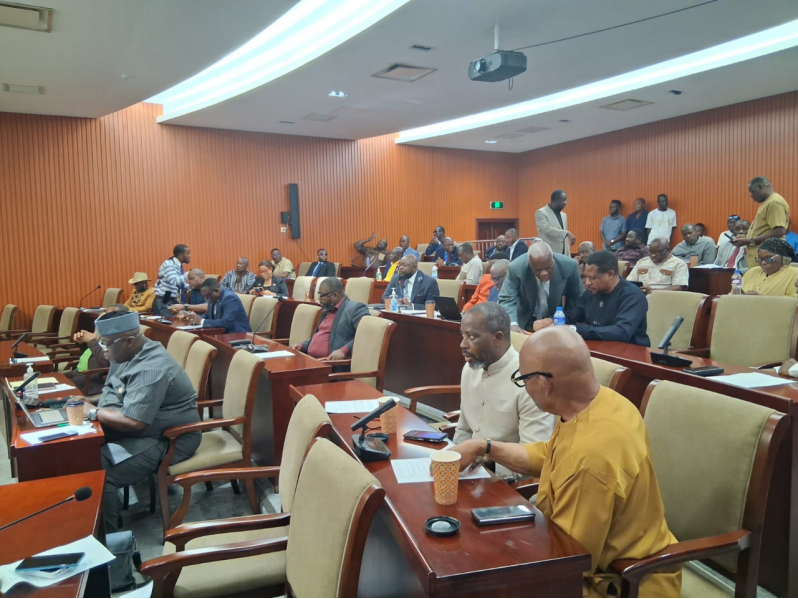
Lofa County University (LCU) conducted a one-day workshop on Research Writing and Grant Proposal Development today, gathering 85 faculty and staff members in a renewed effort to strengthen the university's research capacity and position it as a leading research institution in Liberia. The workshop aimed to enhance the research and grant-writing skills of faculty and staff, enabling them to compete for research funding, produce high-quality scholarly work, and improve the university's academic reputation.


Speaking at the opening of the workshop, Dr. Washington Kezelee, Vice President for Research and Grants, encouraged faculty members to actively engage in research. He noted that quality research enhances individual academic reputations and positively impacts the overall ranking of the university. Dr. Kezelee emphasized that universities worldwide are typically assessed and ranked based on the quality and impact of their research output. He urged participants to take advantage of the training to develop competitive research and grant proposals.


Additionally, Dr. Adama Gross, Vice President for Academic Affairs, challenged faculty and staff to take research and grant proposal development seriously. He stressed that successful grants attract financial resources, create opportunities for institutional growth, and contribute to national development.


The workshop featured presentations from several experienced facilitators, including Fred Tosiah, Director for Research and Grant; Varney Kromah, Assistant Director for Research; and Yanwoi Suborbi, Dean of Extension. They shared practical knowledge on research methodologies, proposal writing, and strategies for securing grant funding.


This workshop is part of Lofa County University's ongoing commitment to promoting a strong research culture and advancing academic excellence through innovation, collaboration, and knowledge generation.


Torrential Rains Flood Abidjan, Disrupting Traffic and Trapping Residents

Abidjan, Côte d'Ivoire — June 29, 2026 Torrential rains have inundated several neighborhoods in Abidjan, Côte d'Ivoire’s economic hub, leaving vehicles stranded and residents trapped as floodwaters surged through the city overnight into Monday.

Heavy rainfall that began late Sunday continued into Monday morning, submerging roads and cutting off access in multiple districts. Among the worst-hit areas were 9 Kilos, Songon Carrefour Hévéa, Treichville’s Rue des Cimenteries, the Paillet–Carrefour des Deux Plateaux axis, and Carrefour Zone in Yopougon. Eyewitnesses reported that rising waters rendered key thoroughfares impassable, forcing commuters to abandon vehicles and wade through flooded streets.

The national weather service had issued an Orange Alert for the Autonomous District of Abidjan ahead of the storm, warning of a high risk of flooding and urging residents to remain vigilant. Authorities reiterated calls for residents to avoid low-lying areas and flooded roads as rains are expected to persist.

The flooding underscores the recurring challenges posed by Côte d'Ivoire’s annual rainy season. According to the National Office of Civil Protection (ONPC), last year’s rains claimed 18 lives, inundated 79 homes, and damaged 47 public infrastructure facilities. Emergency services remain on high alert as they monitor conditions across the city.


Hormuz Traffic Drops After Saturday Strike On Vessel

Strait of Hormuz traffic slowed over the weekend after a vessel was struck while transiting the waterway on Saturday, and a fresh exchange of strikes between the United States and Iran strained their preliminary deal to end the conflict.

In total, 29 commodity vessels crossed on Saturday and 12 transited on Sunday, according to data from the maritime tracking firm Kpler.

Sunday’s figures marked a sharp decline from last week, when a memorandum of understanding signed by Tehran and Washington on June 15 boosted traffic through the strait to its highest level since the start of the Middle East war, reaching 70 crossings on Wednesday, according to Kpler.

Despite Iran’s warning against using unapproved shipping lanes, vessels continued to take several routes through the waterway over the weekend.

After a vessel was struck while transiting the strait on Saturday morning, ships continued for several hours to use a southern corridor through Omani waters before traffic appeared to slow, according to the Kpler-owned website MarineTraffic.

The website tracks only vessels with active transponders, meaning additional ships may have crossed with their signals switched off.


More ships entered the Gulf over the weekend than departed, reversing a trend seen over the previous week, when efforts focused on evacuating seafarers stranded in the Gulf.

A UN-led operation to evacuate 11,000 seafarers was suspended on Thursday after a vessel was struck in the Gulf of Oman.


Four tankers and a container ship used the southern Omani corridor to enter the Gulf on Sunday, escorted by US Navy vessels, according to a post on X by HFI Research.

No vessels used that corridor to exit the Gulf on Sunday, according to Kpler.

Total figures may rise further as crossings are identified retrospectively, notably through satellite imagery.

Iran said Monday that it had held its first meeting with Oman to discuss managing the strait, as Washington warns it will not accept transit fees for using what it considers an international waterway.

June 1, 2026
Liberia’s Civil Service Chief Faces Backlash Over Political Rally Appearance
By The Messenger March 24, 2026
Liberia’s House of Representatives has passed legislation prohibiting active government officials from serving on the boards or management of state-owned enterprises (SOEs) and public corporations, in a move aimed at strengthening governance and accountability. The bill, adopted during the House’s 19th sitting of its third session, builds on existing fiscal policy that already bars officials from receiving sitting fees for board service under the 2024–2025 budget framework. Lawmakers say the measure will eliminate conflicts of interest, prevent double compensation, and promote transparency in the management of public institutions. The legislation was introduced by Representative Anthony F. Williams of Maryland County Electoral District 2. In his submission, Williams outlined five objectives, including enhancing oversight, ensuring efficiency, and safeguarding against decisions that could serve personal interests. He argued that the measure would also encourage job creation by opening opportunities for qualified professionals outside government. The bill further establishes a framework for independent supervision and transparent oversight of public institutions. It is expected to expand funding opportunities by enabling boards to attract and manage financial and development resources independently. The House Committees on Judiciary and Good Governance reviewed the proposal and recommended its passage. Following deliberations, the plenary unanimously approved the measure, which now advances to the Senate for concurrence in line with legislative procedure. If enacted, the law would mark a significant step in Liberia’s efforts to strengthen institutional independence and ensure responsible use of public funds.
LCU Board
By The Messenger March 24, 2026
Gbarnga, Bong County – The Board of Trustees and Senior Staff of Lofa County University (LCU) have successfully concluded a two-day strategic retreat held from March 13–14 in Gbarnga. During this retreat, they made significant decisions aimed at strengthening governance, accountability, and academic quality at the university. The retreat primarily focused on addressing the key challenges facing the university and identifying practical measures to improve its operations. By the end of the session, the Board approved 19 policies developed under the leadership of University President Dr. Isaac Podah. Additionally, they established two Memoranda of Understanding (MOUs): one with Ahmadu Bello University in Nigeria and another with the Change Agent Network in Fessibu Town, Zorzor District. Under the partnership with Ahmadu Bello University, faculty members from the Colleges of Agriculture, Engineering, Science, and Technology will have opportunities to pursue advanced studies, which will enhance their professional capabilities. Meanwhile, the MOU with the Change Agent Network will enable Lofa County University to take control of institutional assets in Fessibu, valued at over US$450,000. This transfer follows a request from local stakeholders, including citizens of the Zorzor and Salayea Districts. The planned takeover aims to expand the university’s infrastructure and support its long-term development agenda. The Board has tasked the administration with engaging relevant authorities, including the Lofa County Legislative Caucus, to ensure a smooth and transparent process. Among the key policies approved is the Academic Policy, which establishes standards for teaching, learning, grading, and curriculum development. The Finance and Petty Cash Policies introduce stricter financial controls to enhance transparency and accountability. Additionally, the Procurement Policy defines clear procedures for acquiring goods and services. Other policies include the Internal Audit Policy to improve oversight, the Risk and Infrastructure Policy to address safety and sustainability concerns, the Fixed Assets Policy for proper management of university property, and the Study Leave Policy to guide staff development, among others. A Historic Milestone University officials described the outcomes of the retreat as a major milestone, noting that it represents the first comprehensive set of policies adopted since the institution's founding. These decisions are expected to improve institutional management, enhance academic delivery, and position Lofa County University for sustained growth and stronger partnerships. At the conclusion of the retreat, Board Chairman Rev. Victor Padmore commended members for their commitment and described the discussions as productive. He urged continued collaboration to advance the university’s development.
By Alphonso Zean Soe February 27, 2026
A heated legal debate unfolded in Liberia’s Senate on Wednesday as the Liberia Anti-Corruption Commission (LACC) and the Law Reform Commission (LRC) clashed over proposed amendments to the country’s Anti-Corruption Law. At the center of the dispute is a controversial provision that would shift the burden of proof in corruption cases from prosecutors to the accused. The Proposed Amendments Drafted by the LRC, the legislation seeks to introduce illicit enrichment laws in line with the United Nations Convention Against Corruption (UNCAC). The reforms would require public officials to justify wealth that significantly exceeds their lawful income. Cllr. Bornor Varmah, Chairperson of the LRC, argued that the changes are essential to strengthen accountability, deter bribery, and enhance Liberia’s credibility with international financial institutions. He told senators that the reforms would help recover stolen assets, redirect funds to public services such as healthcare and education, and position Liberia as a more attractive destination for foreign investment. “The law would establish a paradigm shift in the burden of proof,” Varmah explained. “Once the state demonstrates a financial discrepancy, the accused must provide a reasonable explanation for their assets.” LACC’s Constitutional Concerns The LACC, however, raised strong objections. Chairperson Cllr. Alexandra K. Zoe warned that shifting the burden of proof undermines constitutional protections against self-incrimination, citing Articles 20(A) and 21(b) of Liberia’s 1986 Constitution. “While the Commission welcomes the removal of statutes of limitations and the criminalization of illicit enrichment, we are deeply concerned that shifting the burden of proof may violate constitutional rights,” Zoe told lawmakers. She cautioned that such contradictions could lead the Supreme Court to dismiss corruption cases, weakening the fight against graft. Zoe also criticized provisions allowing the removal of LACC officials by the executive branch, arguing that such measures would compromise the Commission’s independence. “We can be investigating the executive, yet the same executive has the power to remove us at will. That undermines the robustness of our institution,” she said. Legislative Review Continues Despite objections raised during the drafting process, Zoe noted that the LRC insisted on retaining the disputed clauses. Senators concluded the hearing after hours of testimony, pledging to continue consultations with integrity institutions as the review process moves forward. Representatives from the Office of the Ombudsman and the Governance Commission also attended, though the latter was dismissed because its chairperson has not yet been confirmed by the Senate. The debate underscores Liberia’s struggle to balance aggressive anti-corruption measures with constitutional safeguards, a challenge that will shape the country’s governance and international standing in the years ahead.
By BUCHANAN, Liberia February 11, 2026
Why is Bassa Youths embracing a Proposed Youth-based Political Party ?
By Mr. John Saylay Singbae II February 1, 2026
KAKATA, Liberia — On a humid afternoon in Kakata, the message cutting through the static of media platforms in Margibi was neither cautious nor conciliatory. It was a challenge. “You cannot keep waiting for politicians to rescue you,” John Saylay Singbae II told listeners, his voice steady but urgent. “They will never do for you what you can do for yourselves.”